I’m going to say something that may be unpopular.
The Children’s Mental Health Awareness Week theme for 2026 — “This Is My Place” — doesn’t quite land for me.
On the surface, it sounds warm and positive. The theme encourages pupils to think about places where they feel safe and where they belong. Home. School. A football club. A grandparent’s house.
It sounds harmless enough.
But I have two concerns.
1. It isn’t trauma-sensitive
When we ask children to identify a place where they feel safe, we assume they have one.
For some children, home is not safe.
For some, school is not safe.
For others, even clubs or community spaces can hold experiences of exclusion, bullying or instability.
If we are not careful, asking children to name their “safe place” can unintentionally highlight what they don’t have. In trauma-informed practice, we understand that safety cannot be assumed — it must be created.
2. External places don’t guarantee internal safety
Even when a child is physically in a safe environment, their nervous system may not feel safe.
A child carrying anxiety, grief, sensory overwhelm or chronic stress can sit in the calmest classroom and still feel on edge. Safety is not just about geography. It is about physiology.
This is where ancient teachings — particularly yoga — offer something far deeper than a surface-level exploration of place.
The Most Important Place: The One Inside
In yoga philosophy, the most important place we learn to inhabit safely is ourselves.
Through body awareness, breath regulation, emotional recognition and mindset training, we help children build an internal sense of steadiness. A place they can return to. A place that does not depend on who is around them or what room they are in.
A place that feels like home.
One of the biggest disruptors of this internal home is what children often describe as “big feelings.”
Anger.
Worry.
Sadness.
Jealousy.
Excitement that tips into overwhelm.
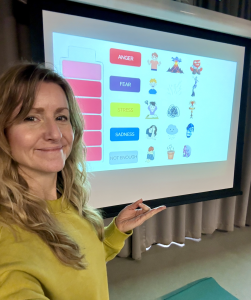
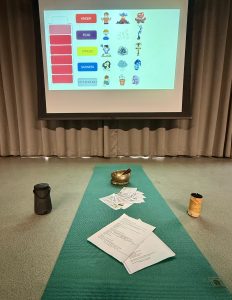
For Children’s Mental Health Awareness Week this year, rather than focusing on external safe places, I focused on five big emotions:
• What might trigger them externally
• How they feel in the body
• How to notice them without judgement
• Practical tools to regulate and rebalance
Because emotional literacy without regulation skills is incomplete.
From Awareness to Regulation
In schools across Hampshire, I see the same need repeatedly:
Children (and adults) are feeling a lot — but they don’t always have the tools to process what they feel.
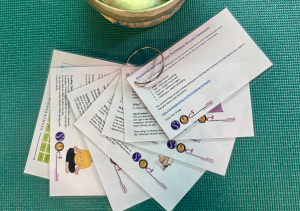
In our sessions, we explored:
• Simple breath practices to calm the nervous system
• Body scanning to recognise emotional signals
• Movement sequences to release stored tension
• Language to name feelings safely
• Mindset shifts to reduce shame around big emotions
The result?
Children begin to understand that emotions are not the enemy. They are information in the form of energy. And information can be worked with.
They realise the safest place is one they can build within themselves.
Bringing This Into Schools
If we truly want to support children’s mental health, we must move beyond themes and posters. We must give them embodied tools they can use every day — in the classroom, on the playground, at home.
That is what these sessions aim to provide: practical, trauma-aware emotional regulation skills that benefit pupils and staff alike.
If your school would like to explore this approach for a Wellbeing Day or Mental Health Taster session, Sam B Yoga would be delighted to bring these essential tools to your setting.
Because every child deserves to feel safe — not just somewhere, but within themselves.